Environmentally Responsible
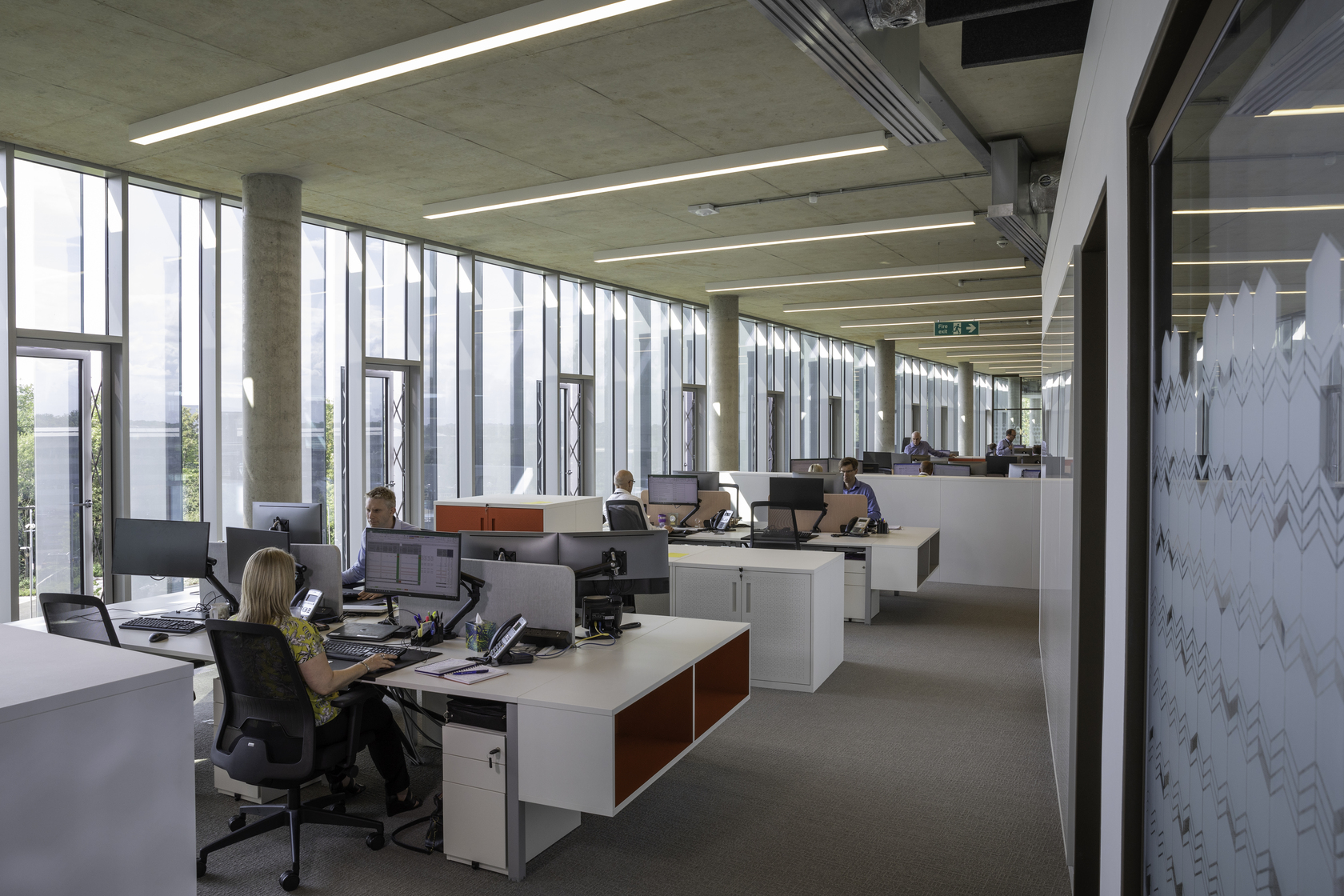
The office spaces revolve around a triple-height atrium where a feature accommodation staircase connects the three floors to promote interaction and collaboration with 400+ staff, while skylights at roof level provide additional natural light and ventilation deep into the plan.
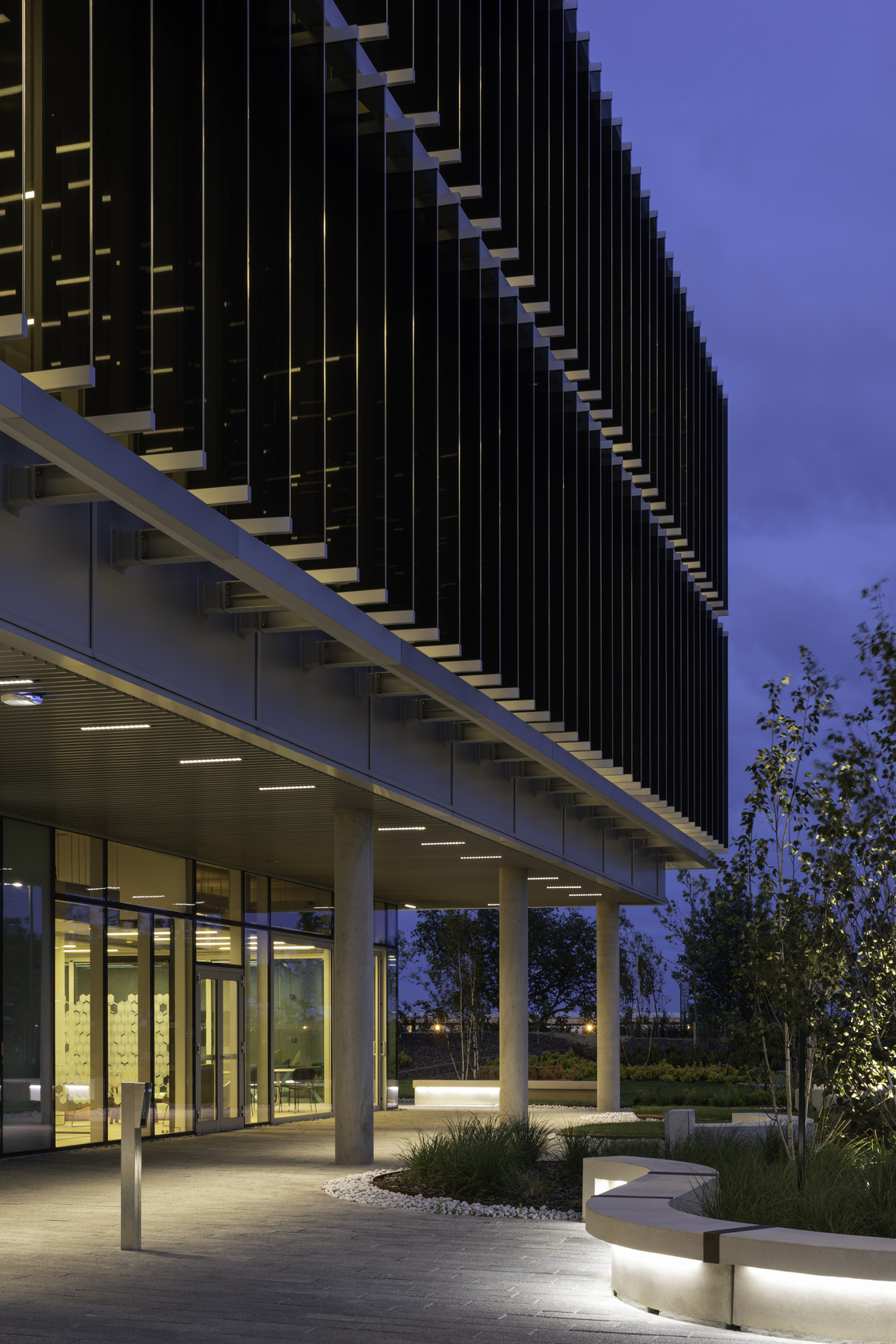
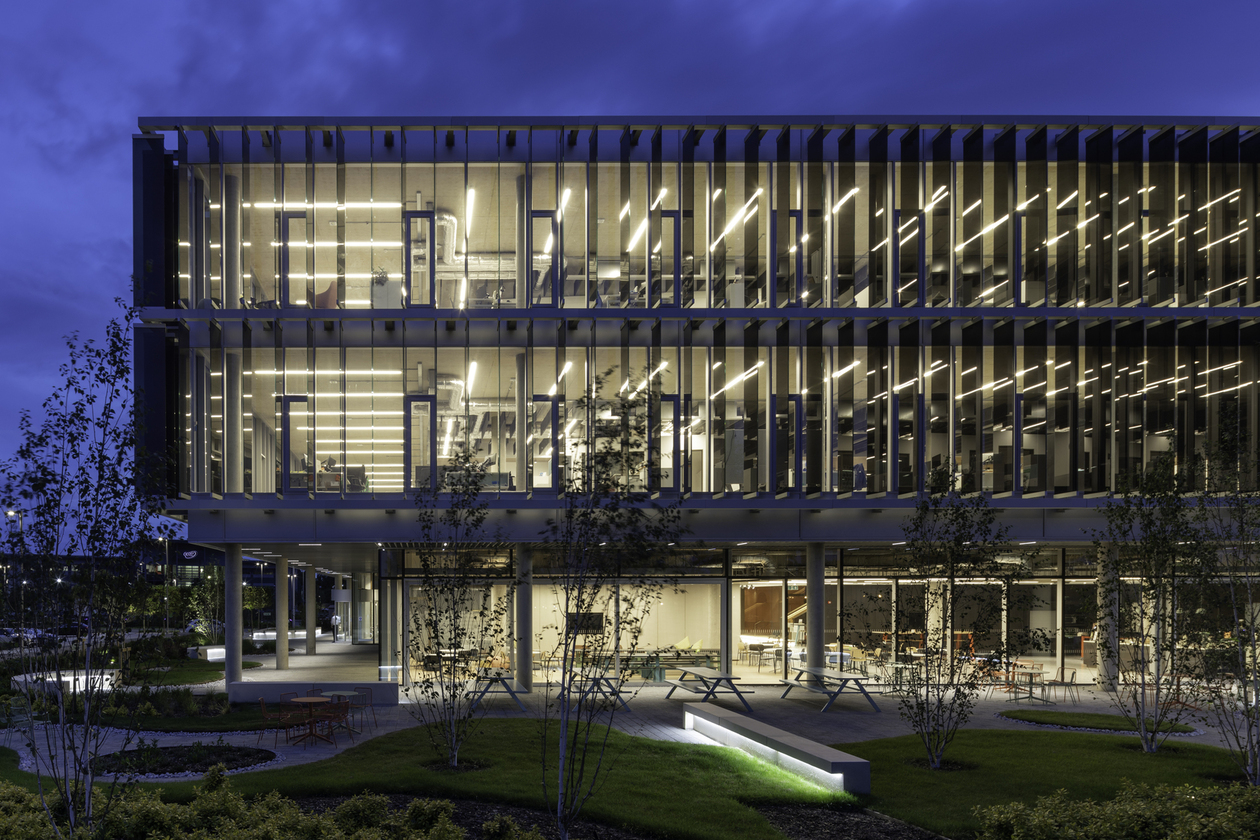
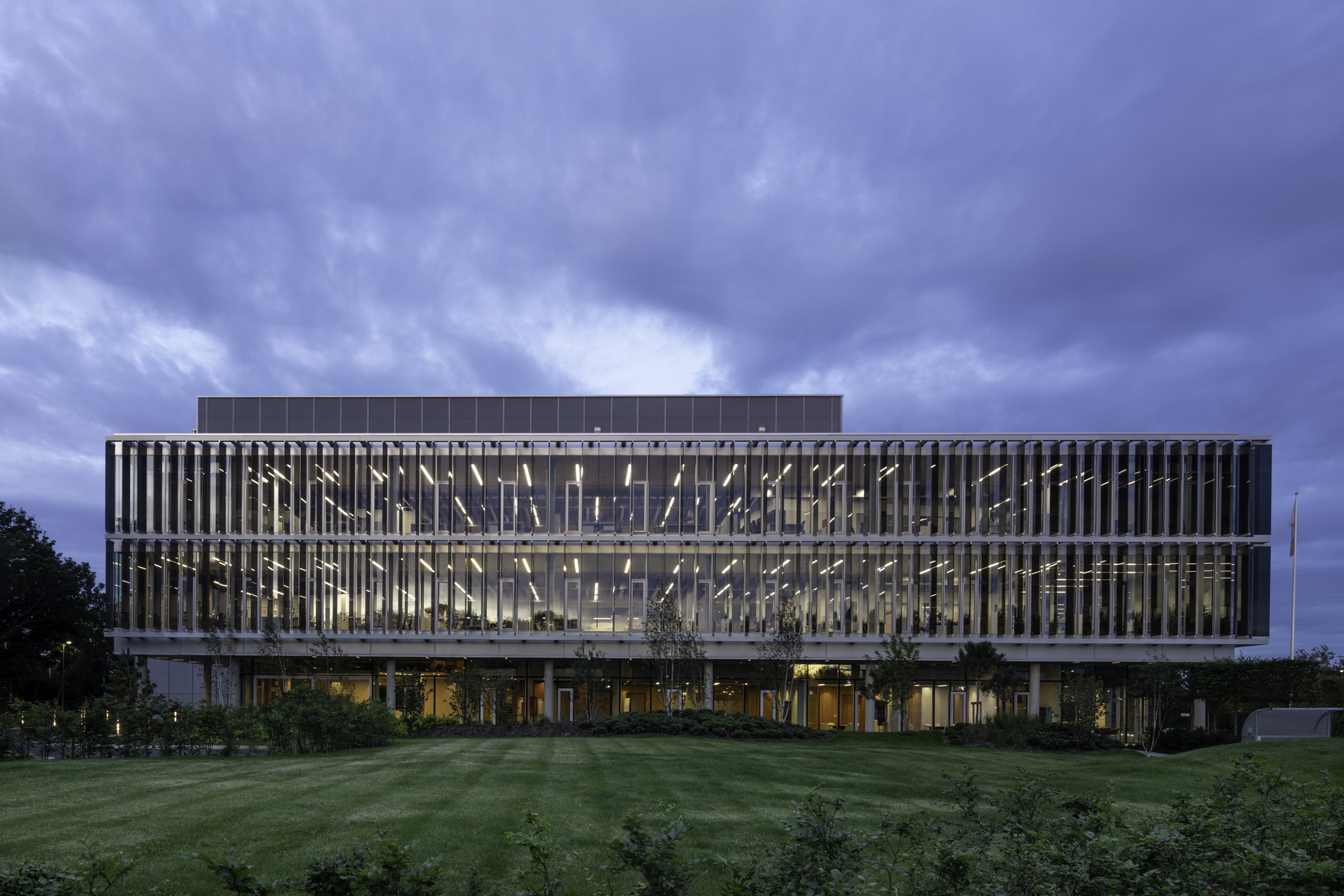
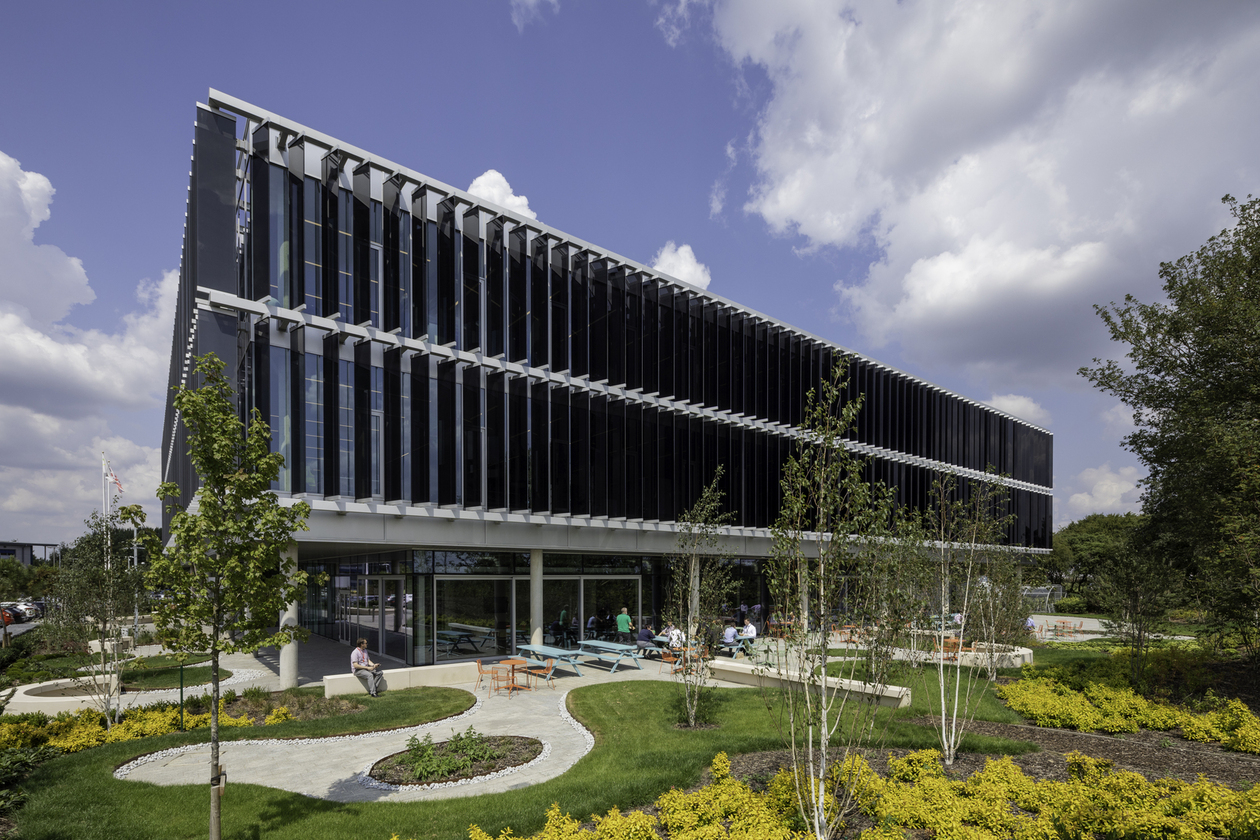
The ground floor is slightly recessed from the perimeter line of the floors above, eliminating the need for an external solar shading system. A prominent cantilever canopy above the protruding reception area emphasises the main entrance.
The design brief called for a building in keeping with ABF’s values of cost effectiveness and value for money, a “modern building fit for 2030 and beyond, with timeless/classic design and natural light and views out to the surrounding area as a key deliverable in the design philosophy, all relating to health and wellbeing for the end users.
Precedents were considered in which contemporary office buildings use glazed curtain walling in combination with external glazed shading systems to optimise natural light deep into the building, minimising artificial lighting and glare from the sun, and enhancing the wellbeing of occupants.
In terms of the development of ABF’s new regional HQ, the aim was to create an environmentally responsible building, with an exemplar approach towards low-energy (Passive House) design principles.
This involved energy demand minimisation through effective building form and orientation, good envelope design and proficient use of services, such that the building itself is used as the primary environmental modifier.
The construction over 20 months by main contractor Bowmer & Kirkland was of in-situ concrete where the exposed concrete also acts as thermal mass in compliance with Passive House design principles as ABF was designing for an “A” energy efficiency rating to potentially help save £350,000 in combined running costs.
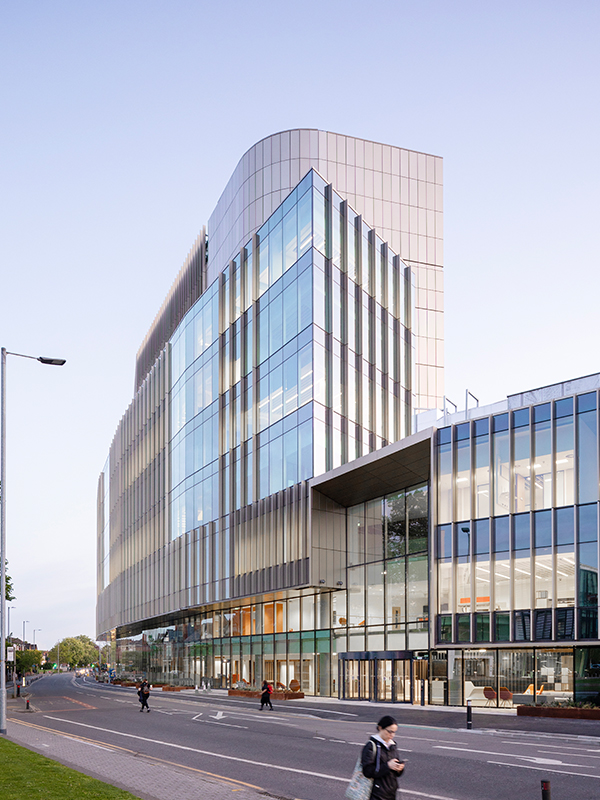
The entirety of the building envelope is Novastruct’s curtain wall systems with 50mm sightlines and consistent size modules that also incorporate sections of openable floor-to-ceiling windows to allow for a degree of personal control of ventilation. The objective was to create a visually open transparent façade to all elevations, maximising natural light into the building.